The first snow rarely arrives when you expect it. You leave work at six, the temperature has dropped ten degrees since lunch, and the roads are already glazed. What turns that drive from a nuisance into a genuinely bad night usually isn't the weather. It's the scraper buried under a spare jacket, the washer fluid that froze, and the tires that were three summers past their best.
The fix is unglamorous and takes about an hour: put the right things in the car, check the items that decide how much grip you actually have, and adjust a few habits before the salt trucks are out.
Start With Tires, Because Nothing Else Counts Until They Grip
Every other item on this list is a backup plan. Tires are the only thing touching the road, so start there.
Check tread depth with a gauge, or use the classic test: stick a quarter upside down into a groove with Washington's head pointing down. If you can see the top of his head, the tire is worn. Once tread is down to roughly 4/32 of an inch, a tire that felt fine in July is a liability in snow — and well before the legal minimum, it stops clearing water and slush the way it should.
Then think about the rubber compound itself. All-season tires stiffen in cold temperatures, which is why they spin so easily on a 25-degree morning even with decent tread. Winter tires stay pliable when it's cold and carry far more sipes — the small biting edges that grab packed snow. If you live somewhere with real winters, a set of four winter tires on their own rims is the most effective safety purchase you can make. Sort that out now, before the first storm scrambles every tire shop's appointment book.
Check pressure too. Air contracts as the temperature drops, so a tire that reads full in October can be noticeably soft by December. Check them cold, once a month, and don't forget the spare, the jack, and the lug wrench.
Build an Emergency Kit That Actually Lives in the Car
A kit you assembled three seasons ago and then cannibalized for a camping trip is not a kit. Build it, then leave it alone. A plastic tote under the cargo floor works well, and it should solve three problems: staying warm, being seen, and getting unstuck.
- A wool blanket, plus a spare hat, gloves, and socks. Clothing beats a heater that isn't running.
- A bright LED flashlight with fresh batteries, and a headlamp so both hands stay free.
- Jumper cables or a lithium jump pack. A jump pack is easier to use alone and doesn't need a second car.
- A folding shovel, a tow strap, and a bag of sand, kitty litter, or a set of traction mats.
- Reflective triangles or flares, and a hi-vis vest you can pull on before stepping into traffic.
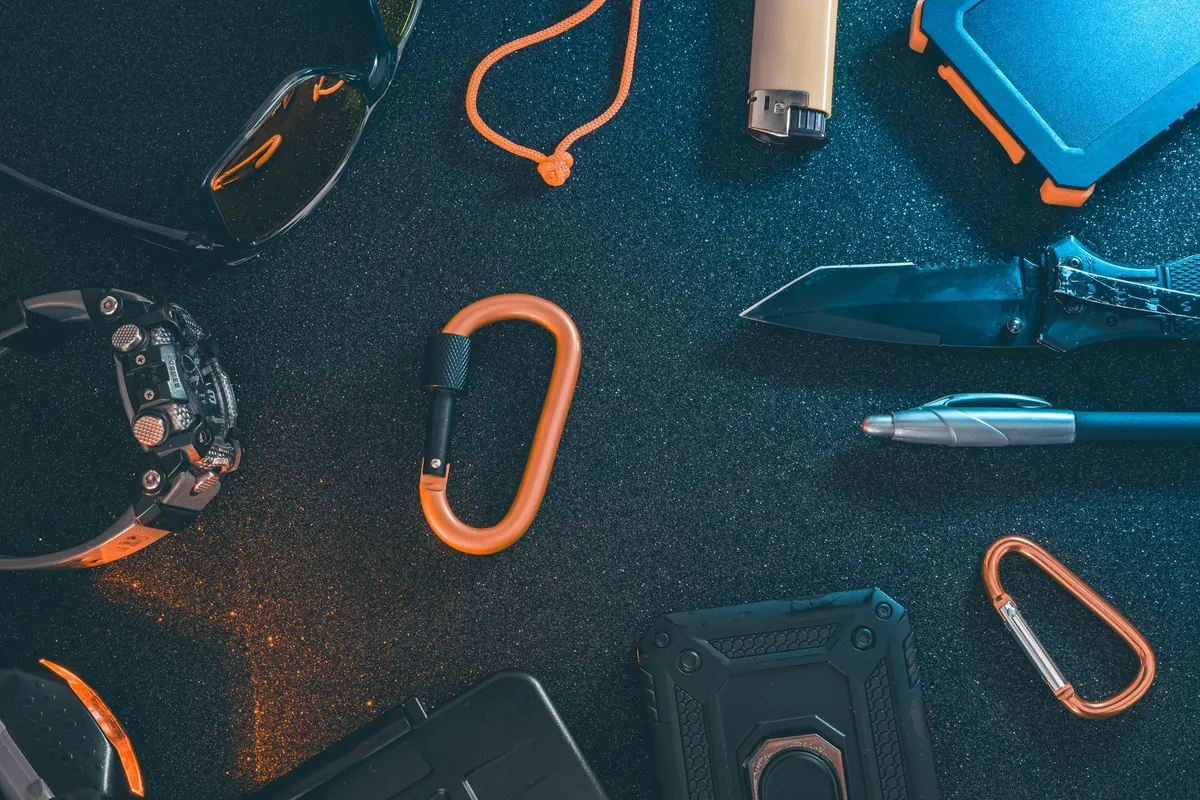
- A basic first aid kit, a multi-tool, and a roll of duct tape.
- A phone charger that works with the engine off, plus emergency numbers written on paper.
- Water and non-perishable snacks — though in a deep cold snap, expect bottles to freeze.
- An ice scraper, a snow brush, and a spare jug of winter-grade washer fluid.
Skip the old advice about burning a candle for warmth. An open flame inside a parked car is a bad trade for a few degrees.
Visibility Is Where Most Winter Trouble Starts
You can't avoid what you can't see, and winter attacks visibility from three directions: your windshield, your lights, and the spray coming off the car ahead.
Replace wiper blades if they streak or chatter. Top off washer fluid with a genuine winter blend; summer fluid freezes in the reservoir and the lines, and you'll discover that at the worst possible moment. Clean the inside of the glass as well — a filmy haze builds up over months, and defrosters fight it more slowly than you'd think.
Clear snow off the whole car, not just a porthole. Snow left on the roof slides forward the first time you brake hard, and snow on the hood blows back into a white sheet at speed. Clear the lights, mirrors, backup camera, and license plate. In many places, driving with an unreadable plate or a roof load of snow is a ticketable offense, and it's inconsiderate to the driver behind you regardless.
Never pour hot water on a frosted windshield. The temperature shock can crack the glass. Use a scraper, a proper de-icer, and the defroster, and let the heater work while you finish clearing the rest of the car.
Adjust How You Drive, Not Just What You Carry
Grip is a finite budget in winter, and steering, braking, and accelerating all draw from it. Do one thing at a time.
Leave more space than feels reasonable — double or triple your normal following distance. Brake earlier and more gently, and finish braking before you begin turning into a corner. Smooth inputs beat quick corrections every time. Turn off cruise control on any surface that might be slick; drive wheels that can't feel the road will happily hold the throttle open while you spin.
Two spots deserve particular suspicion: bridges and overpasses, which freeze before the surrounding pavement because cold air moves underneath them, and shaded corners the sun never reaches. Black ice looks like wet pavement. If the wheel suddenly feels light and the tires go quiet, ease off the throttle and steer where you want to go rather than where the car is pointing.
Keep the tank above half in winter. It gives you options during a slow crawl or a closed road, and a fuller tank is less prone to condensation. Warming the car for a minute or two is plenty — then drive gently until the engine and tires have some heat in them.
The Night Before the First Snow
Set yourself up so the morning is boring. Move the scraper, brush, and gloves into the cabin instead of the trunk. Check tire pressures and washer fluid, fill the tank, load the kit, and tell anyone else who drives the car where it lives.
Then, when the snow does come, the only decision left is whether the trip is worth making. If it isn't, staying home remains the best piece of winter equipment anyone owns.
Photo: Sonny Vermeer / Pexels